



Accessing the Knowledge Center effectively requires a simple, one-time registration.
How Turbochargers Work: 8 Key Insights for Mechanics and Car Owners
Every day, millions of vehicles equipped with Garrett Motion turbochargers travel the world’s roads.
Demand for turbocharging has risen dramatically over the last 30 years as automakers adopt the technology to improve fuel efficiency, meet emissions standards, and enhance overall engine performance.
Modern turbochargers are highly engineered and extremely reliable, often delivering a lifecycle of up to 150000 km. Because turbos are also complex components, understanding how they work – and how to diagnose potential issues – is essential for garages and technicians.
Below are 8 key insights into turbocharger operation, performance, diagnostics, and replacement.
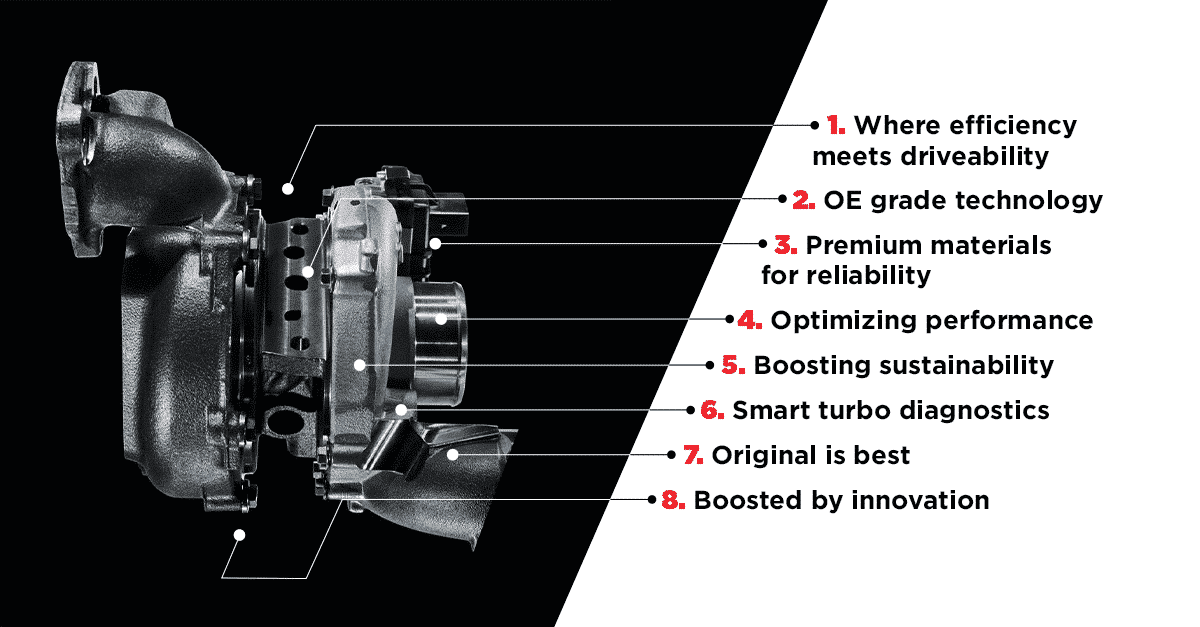
1. How Turbochargers Improve Efficiency and Driveability
A turbocharger uses exhaust energy to spin a turbine that drives an air compressor. Since engines burn fuel more efficiently when more oxygen is available, the turbo forces denser, compressed air into the cylinders. This results in:
- Better fuel efficiency
- Lower emissions
- Higher power output
- Improved throttle response
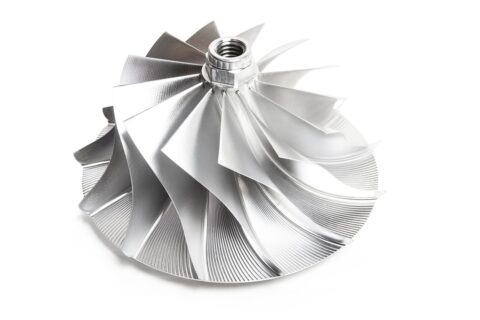
At full load, air speeds inside the compressor can approach supersonic velocity, requiring high‑precision engineering. The compressed air passes through a diffuser and volute, converting kinetic energy into pressure and maximizing oxygen density before combustion.
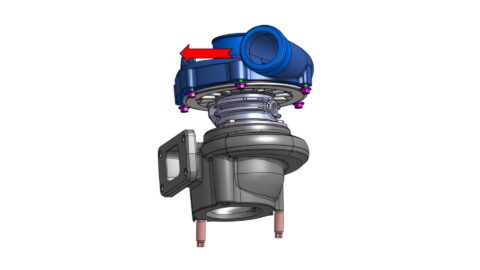
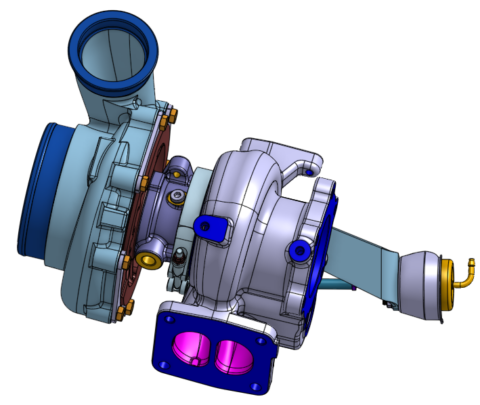
Core Components of a Turbocharger
- Ball bearings
- Oil inlet
- Turbine housing
- Turbine wheel
- Center housing
- Compressor housing
- Compressor wheel
- Backplate
2. OE‑Grade Turbo Technology for Service Replacement
Garrett turbochargers are engineered to withstand the extreme pressures and temperatures of modern engines and operate at speeds up to 300,000 RPM.
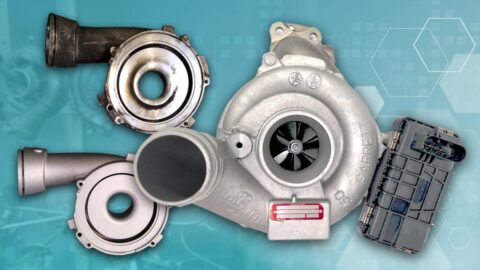
When a turbo reaches the end of its life, garages have access to more than 8,000 OE‑grade Garrett replacement turbos, covering all major passenger vehicle applications. These units match original equipment specifications and integrate the latest Garrett innovations.
3. Premium Materials Designed for Durability
All Garrett replacement turbos meet the rigorous specification of auto makers, with each unit manufactured and calibrated to original equipment specification and certified to perform reliably for three years or up to 150,000km. This is critical, given that some systems rotate at 300,000 rpm and operate in temperatures up to 1050oC.
Engineering design and materials are fundamental to turbo performance and life expectancy. Some copy turbos have been known to fail within hours of installation – and the result can be catastrophic engine damage. For example, in sub-standard replacement turbos, bearing problems are commonplace, and bolts joining the turbine housing to the center housing have been known to ‘relax’, resulting in gas leakage, mechanical damage and oil contamination of the catalytic converter or DPF system.
4. Optimizing Turbo Performance and Minimizing Lag
Turbo lag occurs when there is a brief delay between throttle input and turbo response. Thanks to advanced engineering and electrification technologies, Garrett has significantly minimized turbo lag in modern systems. However, independent testing shows that copy turbos can produce up to 40% less performance compared to genuine Garrett aftermarket products. Replacing OE‑quality systems with low‑cost alternatives can reduce responsiveness and create customer dissatisfaction.
The Garrett brand is synonymous with world-leading innovation and quality – which stands in stark contrast to the reputational and business risks being run by some garages choosing to use low cost, non-OE quality turbos and copycat units.
 5. Enabling More Sustainable, Efficient Engines
Turbo technology is fundamental to the auto industry’s drive for downsized, more efficient, better performing engines that meet increasingly stringent emissions standards. Garrett turbo systems strike the perfect balance between the latest efficiency/emissions standards and enhancing performance.
Our studies show that Garrett turbos provide superior driveability, with up to 40% better low-end torque than non-original turbos
6. Smart Turbo Diagnostics With Garrett Installer Connect
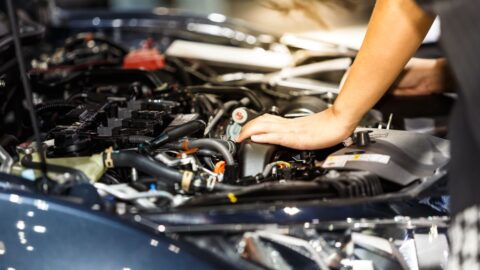
Diagnosing turbo faults is challenging because symptoms often originate from other engine issues. For example:
- Oil leaks may appear to damage a turbo
- But the root cause may be an unrelated engine component
Failure to perform timely oil and filter changes can cause carbon buildup, turning the lubricant into an abrasive that damages bearings.
The Garrett Installer Connect Free Training provides a smart, step‑by‑step diagnostic to help technicians identify the true root cause of turbo issues. It offers structured checks, expert guidance, and access to training resources.
If you want to learn more about turbo damage, oil leakage and external influences check out our Installer Connect Level 4 Training Notes.
7. How to Identify a Genuine Garrett Turbo
Many vehicles on the road today use Garrett technology. To verify whether a turbo is genuine, technicians should check the part number against the Garrett online catalog.
The turbo nameplate includes:
- Garrett part number
- Turbo model
- Serial number
This ensures correct identification and replacement with OE‑grade components.
Garrett’s Knowledge Center and Installer Connect training modules offer extensive resources to help mechanics expand their turbo expertise.
8. Turbocharging Innovation Powered by 65+ Years of Engineering
Garrett’s rich heritage of innovation goes back more than 65 years when John Clifford Garrett developed the T15 turbo in 1954 for a Caterpillar D9 crawler.
Fast forward to the 21st century, and in the intervening years the company has developed multiple auto industry ‘firsts’ – including the legendary Variable Nozzle Turbine turbo. Garrett is also a leader on the racetrack, having boosted 23 winners of the 24 Hours of Le Mans, plus numerous podium positions in other motorsports series
And the story of innovation and engineering excellence continues. Today, the company is at the forefront of electrification, through its market-leading E-Turbo and fuel cell technologies. We continue to elevate research and development in the auto industry on the road to zero emissions, working in partnership with manufacturers on future-focused solutions while enabling garages and mechanics to meet the engine boosting needs of their customers.

See Other Relevant Content from Knowledge Center