




Accessing the Knowledge Center effectively requires a simple, one-time registration.
Testing Your Turbo System
Many problems with turbo systems can be identified before the catastrophic happens through simple system testing.
Pressurize system to test for leaks
- Clamps — Check tightness
- Couplers — Check for holes or tears
- CAC core / end tanks — Check for voids in welds
Monitoring
The turbo system in your car should be monitored to insure that every aspect is functioning properly to give you trouble-free performance.
Instrumentation used to monitor / optimize system: The most accurate way to calibrate and optimize a system is through data logging!
- Oil Pressure (Required to monitor engine operation)
2. Oil Temperature (Required to monitor engine operation)
3. Water Temperature (Required to monitor engine operation)
4. A/F Ratio (such as a wideband sensor; required to monitor engine operation)
5. Manifold Pressure
6. Turbine Inlet Pressure
7. Exhaust Gas Temperature
8. Turbo Speed Sensor
Manifold Pressure
— Calibrate actuator setting to achieve manifold pressure required to meet hp target
— Detect over-boost condition
— Detect damaged actuator diaphragm
Back Pressure
— Monitor pressure changes in turbine housing inlet
— Affect of different turbine housing A/R’s
— Increased back pressure decreases Volumetric Efficiency thus decreasing ultimate power
Pyrometer
— Monitor exhaust gas temperature (EGT) in manifold / turbine housing
— Adjust calibration based on temperature rating of turbine housing material or other exhaust components Turbo Speed
— Determine operating points on compressor map
— Determine if the current turbo is correct for the application and target hp
— Avoid turbo over-speed condition, which could damage turbo
11 Point Checklist
- Application Information – target horsepower, intended use of vehicle, etc.
2. Air filter sizing — determine size for application needs
3. Oil Supply — restrictor for ball-bearing turbo
4. Oil Drain – proper size and routing
5. Water Lines — set up for greatest thermal siphon effect
6. Charge Tubing – determine diameter for application needs
7. Charge-Air-Cooler — determine core size for application needs, design manifolds for optimal flow, mount for durability
8. BOV – VTA for MAP engines and by-pass for MAF engines
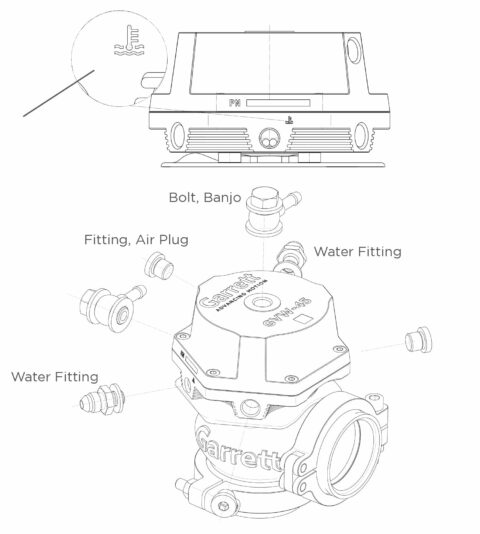
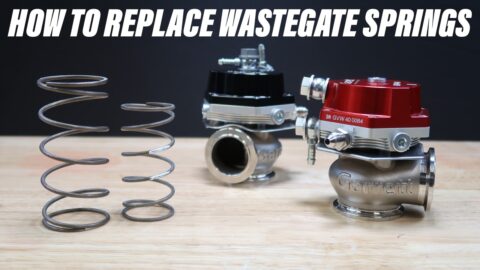
9. Wastegate – connect signal line to compressor outlet, smooth transition to external wastegate
10. System Testing – pressurize system to check for leakage, periodically check clamp tightness and the condition of
couplers
11. System Monitoring – proper gauges/sensors to monitor engine for optimal performance and component durability
See Other Relevant Content from Knowledge Center