


Chris Forsberg’s Twin-Turbo Upgrade: Smaller Frame, Bigger Gains with G-Series II
Going Down Frame Size to Go Faster: Why Chris Forsberg Swapped from a G30-660 to a G-Series II G25-700
Chris Forsberg’s latest twin-turbo upgrade proves that smarter turbo sizing can deliver faster response, stronger control, and serious power in Formula Drift competition.
At first glance, going down a turbo frame size sounds like a step backward in a professional drift car. In Chris Forsberg’s case, it is exactly the opposite.
If you grew up on the old idea that bigger turbochargers always mean more power, Forsberg’s latest setup is the kind of move that makes you think more like a race engineer. His team moved from a pair of Garrett G30-660 54mm turbochargers to a pair of Garrett G-Series II G25-700 54mm turbochargers on his Formula Drift Nissan Z.

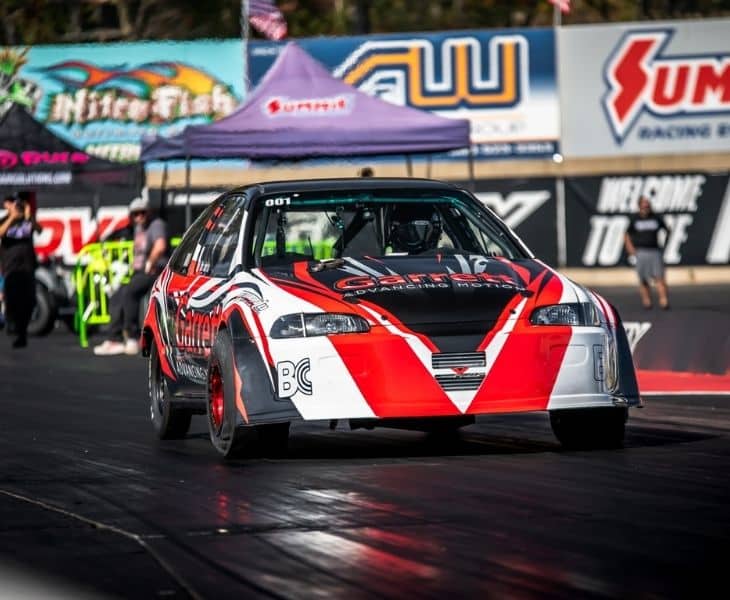
Chris Forsberg’s Nissan Z Formula Drift car during competition, powered by twin Garrett G-Series II turbochargers.
The goal was not to sacrifice performance. It was to improve the kind of performance that actually matters in drifting: immediate throttle response, controllable torque, and repeatable boost recovery when the car is constantly transitioning on and off throttle.
Forsberg pointed out that this updated combination delivered 940 wheel horsepower while still prioritizing response, making the move to a smaller frame a clear performance advantage in competition.
Vehicle and Engine Setup
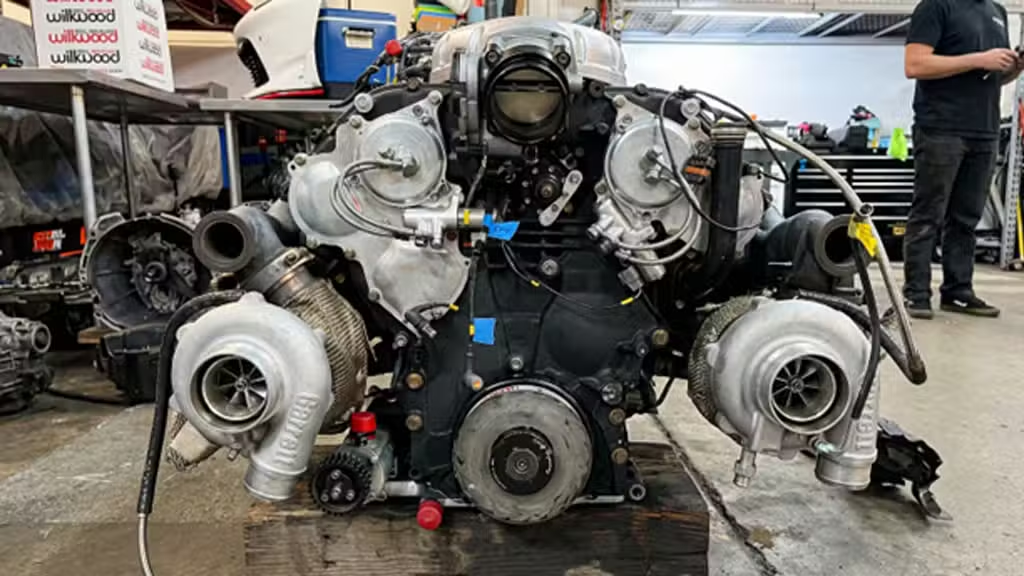
The Boost Logic built VR38DETT engine powering Forsberg’s Formula Drift Nissan Z uses a twin Garrett turbo configuration.
Platform / Chassis
- Nissan Z Formula Drift competition car based on the 2023 Nissan Z
Engine
- Boost Logic built Nissan VR38DETT from the Nissan GT-R platform
- 3.8L billet crank based setup with upgraded fueling and valvetrain
- Previous turbo setup: twin Garrett G30-660 54mm
- Current turbo setup: twin Garrett G-Series II G25-700 54mm
The Key Change: G30-660 to G-Series II G25-700
On paper, moving from a 30-frame turbocharger to a 25-frame turbocharger sounds like a move that would limit top-end performance. Traditionally, that would be the concern. Forsberg’s decision shows how modern turbocharger technology can change that tradeoff.
The previous setup used the Garrett G30-660. The new setup uses the G-Series II G25-700. Even though both combinations are 54mm, the change in frame size and the evolution in compressor technology gave Forsberg’s team stronger response off the bottom end and faster boost recovery.
Why G-Series II Matters
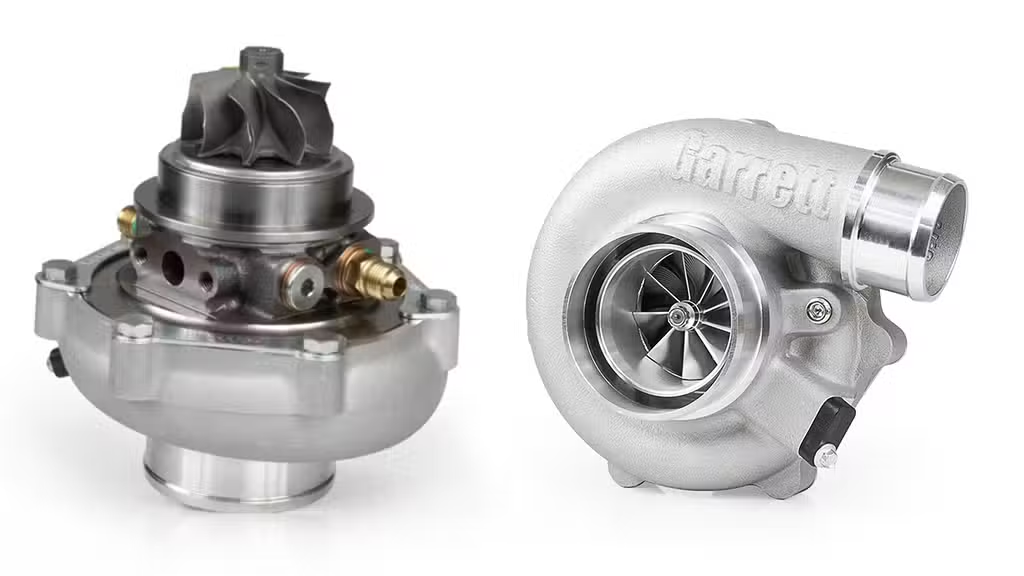
Garrett G-Series II turbocharger technology delivers increased compressor efficiency and up to 10 percent more airflow capability.
The G-Series II family was developed to push performance further within the same footprint. That is a major reason why a smaller frame G25-700 can become such a strong alternative in a demanding motorsport environment.
- Higher compressor efficiency within the same frame size
- Up to 10% more airflow capability
- Improved aero design for stronger performance potential
- Better balance between response and top end power
Bottom Line
Chris Forsberg’s move from a G30-660 to a twin G-Series II G25-700 setup is a great example of smart performance engineering. Instead of choosing a larger frame simply for bigger dyno numbers, his team selected a turbocharger combination that better matches what wins in Formula Drift: response, control, and usable power delivery.
When turbo technology advances, sometimes going smaller is exactly what helps you go faster.